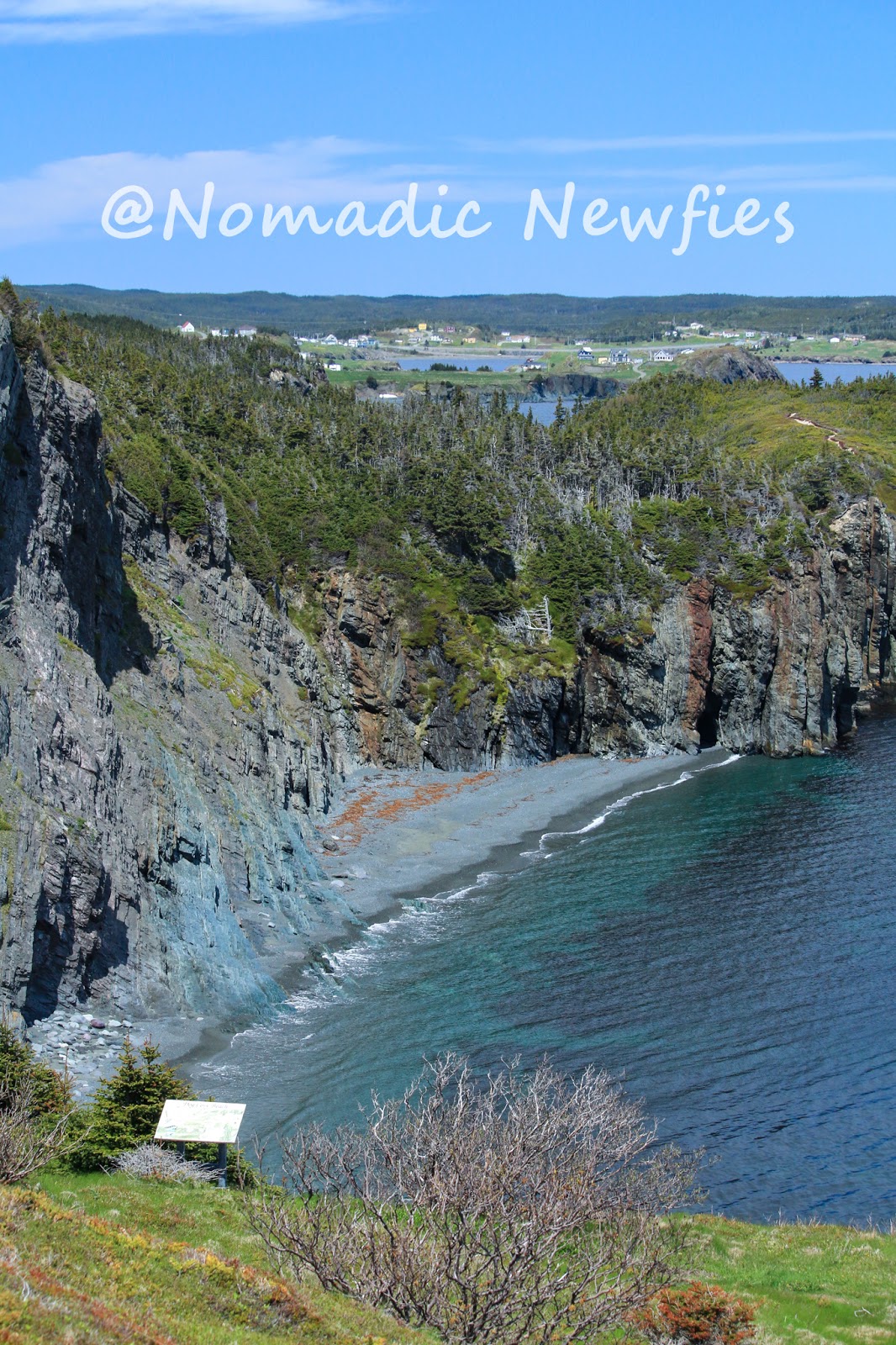
Newfoundland is still only allowing visitors from the Atlantic Provinces to maintain our non-existent (only cases in months have been from returning travelers in self-isolation) Covid-19 status. Newfies are all on-board with this policy, and have also embraced the province's Staycation suggestion. Newfoundlanders are exploring their own province like never before, and I figured I better get in on that before summer was over.
NOTE: IN ORDER TO BETTER SEE PHOTOS IN THEIR FULL 1600 PX. RESOLUTION, VIEW THEM IN THE ALBUM FORMAT BY CLICKING ON THE LEAD PHOTO OR ANY PHOTO IN THE POST. This is especially true for landscape shots. Thanks to Mark for the idea of adding this alert so the photos can be seen at their best!
Friday, August 28, 2020
Staycation Newfoundland - Scenic Green Bay
Sunday, August 2, 2020
King's Cove Lighthouse
I had thought about staying right out on the Skerwink Trail in my tent back in June (and next time I will!) but after I mentioned it to a fellow hiker I realized it might be safer not to advertise I was alone in such an accessible spot.
So off I went to King's Cove to have a new adventure before the day was done. After a rough ride on a long gravel road I finally reconnected with pavement and arrived at the small town of just under 100 residents.
I parked at St. James church and began my trek out to the lighthouse with all my gear in tow. Past the meadow and up the hill through the clouds of black flies waiting for me in the trees I went, sweat pouring off me and my arms quivering from the extra load in my arms and on my back.
While having a rest and letting the sweat dry I heard motorized bikes approaching. Two local gentlemen accompanied me the rest of the way to the light, happily helping me with my gear and showing me around.
King’s Cove received their lighthouse in 1893 and the cast-iron tower was erected on Western Point. Designed and manufactured in the Chance Brothers factory in Birmingham, England, the separate sections for the tower were shipped to Newfoundland and assembled at King's Cove using overlapping riveted joints, common to 1800's ship building and boiler making technology.
I was drifting off to sleep when I thought I saw a flash of light. It was a bit windy but storms weren't in the forecast. Then I saw it again. And again. Umm, yeah, a LIGHThouse.
The morning was beautiful but the flies were out again so I had to pack up quickly. A word about the tent pictured here. I bought it at Canadian Tire and the material makes a very loud plastic rattling sound even in very light wind that has woken me frequently every time I've slept in it so I am now back to my old tent. Not all waterproof tents use the same material, just a tip for anyone who might be in the market for a new tent!
More adventures on the way...
So off I went to King's Cove to have a new adventure before the day was done. After a rough ride on a long gravel road I finally reconnected with pavement and arrived at the small town of just under 100 residents.
I parked at St. James church and began my trek out to the lighthouse with all my gear in tow. Past the meadow and up the hill through the clouds of black flies waiting for me in the trees I went, sweat pouring off me and my arms quivering from the extra load in my arms and on my back.
While having a rest and letting the sweat dry I heard motorized bikes approaching. Two local gentlemen accompanied me the rest of the way to the light, happily helping me with my gear and showing me around.
Even though it was solid rock at the light itself that is where I decided to pitch my tent to escape the flies. The wind wasn't bad at all for being exposed to the water, and I thanked my new friends for their help and settled in for the night.
I'd been advised to make the short walk out to Fish Point for the view before sunset, and not only got a view of some fantastic rock formations but also a great view back to my tent. As I've mentioned the black flies were numerous so I didn't hike the loop and will have to do that if I ever return. Black fly season is short but miserable as they are tiny and their bite is painful. Bug repellent doesn't do much to keep them away either so avoidance or bug net clothing is the best way to go.
King’s Cove received their lighthouse in 1893 and the cast-iron tower was erected on Western Point. Designed and manufactured in the Chance Brothers factory in Birmingham, England, the separate sections for the tower were shipped to Newfoundland and assembled at King's Cove using overlapping riveted joints, common to 1800's ship building and boiler making technology.
With all the lighthouses I'd been to over the years, how had it never occurred to me to spend the night? To be fair back in the States just pitching your tent any old where is not really as commonplace as it is in Newfoundland. Here anything is fair game as long as there isn't a sign posted saying otherwise.
I was really glad I made the trek out once sunset finally arrived. Don't believe that is what it looked like? Here's the 17 second video shot from inside my tent panning from the sunset and then up to the lighthouse above me.
I was drifting off to sleep when I thought I saw a flash of light. It was a bit windy but storms weren't in the forecast. Then I saw it again. And again. Umm, yeah, a LIGHThouse.
Once I realized what it was I discovered it was easy to ignore and drifted right off to sleep. Thank goodness there wasn't a foghorn sounding! Why don't people sleep overnight at lighthouse sites? Maybe all the LIGHT?
More adventures on the way...
Thursday, July 30, 2020
Trinity Views and Icy Feet - The Skerwink Trail Part 2
After rounding the headland on the Skerwink Trail I was eager to see if I would spot more iceberg pieces as I continued along the coast toward Trinity.
There was a section around about the 3 km mark that was a bit difficult with steep eroded trail and no handholds, making me a bit nervous about what was ahead. Don't fret, it was just those few feet that were nerve wracking and then it was smooth hiking with gentle ups and down on well defined trail.
In the summer Trinity is normally a tourist hot-spot with shops, inns and the Rising Tide Theater to round out a nice getaway. Of course there are no performances this year with the Covid-19 outbreak.
This might be a good spot to mention that Newfoundland is still quite strict compared to some other places with their outbreak restricitons. We had over a month with no new cases, and that is due to that extreme vigilance. Even now we only have 3 cases I believe and all of them are returning residents who had been in self-isolation when tested positive.
It's been over 3 weeks since we began letting the other Atlantic Provinces visit our shores, and so far so good. Our Premier has said that if numbers begin to rise we will shut our border again. We are still closed to the rest of Canada and the rest of the world. We hope to welcome you all back next year!
At the 3.5 km the trail winds down off the headland onto a rocky beach cove where I saw more bits of iceberg rolling in on the tide.
Sure ya knows I had to take off m'shoes! I actually had a harder time with all those tiny rocks poking my tender feet than the icy water. And hey, there's another bitty berg just over where I can't get at it!
There are other trails in the vicinity to explore, and I was there for an overnight in my tent so I had to choose one...
Wednesday, July 29, 2020
Bitty Bergs on the Skerwink Trail - Out to Skerwink Head
The only icebergs I've seen this year were on the Skerwink trail about 6 weeks ago in mid-June. But you don't hike the Skerwink Trail in Port Rexton/Trinity East for the icebergs, (one of the top 35 trails in North America and Europe, by the way) you hike it for the views.
The 5.3 km loop trail starts with a short walk from the parking area on the main road and even before I got to the sea stacks I stopped and admired the beautiful blooms in someone's lawn.
I've seen the photos from the Skerwink Trail before, but seeing the views from the trail is indescribable. The smell of the salt air, the breeze on my face, the sound of the water lazily lapping against the shore... and then the assault on the eyes of the jagged rock against the smooth blue water is something that a picture just doesn't capture.
Views like this within a 1 km walk on level ground? Heaven on earth!
And to top it all off, most of these photos were taken with my iPhone. I used both the Canon 70D and the iPhone and even with a polarizing filter on the DSLR the iPhone was the winner. That doesn't happen often, but it's why I use both when I can.
If you don't like heights or just wanted a short jaunt on a hot day you could turn around and be well satisfied. But for those of us who always want more the trail continues on and is level most of the way out towards Skerwink Head with the exception of a few staired areas.
It's about 2.5 km total out to Skerwink Head, and please stick to the trail.
Walking out onto the tipped up headland was a unique feeling - again, watch out for the edge! I left a little painted puffin on the ground for someone to find.
I searched the bird covered rocks, but no actual puffins. They like a bit of dirt to dig their burrows after all. Plenty of other seabirds were making use of them though.
The zoom I had packed with me was not quite enough to get good detail, but maybe your eyes are better than mine and can pick out how many birds are tucked in the crevices.
As I inched up the incline on the headland, suddenly a whole new vista exploded into view, complete with bitty bergs!
And yes, photos taken with the iPhone. Amazing! I did need the DSLR and it's zoom lens for the bitty berg's close-up though. Look at the color!
I kneeled down close to the edge and enjoyed the view for a bit, scouring the water for signs of seals or other wildlife.
I also eyed up the continuation of the trail and debated whether to continue onward or to turn back like I saw the folks who had arrived before me do.
But of course I continued onward. Maybe I wouldn't get back to this trail again soon, after all there is a lot in Newfoundland I have yet to explore.
So, one last look at Dry Cove Beach and then away I went!
I've seen the photos from the Skerwink Trail before, but seeing the views from the trail is indescribable. The smell of the salt air, the breeze on my face, the sound of the water lazily lapping against the shore... and then the assault on the eyes of the jagged rock against the smooth blue water is something that a picture just doesn't capture.
Views like this within a 1 km walk on level ground? Heaven on earth!
And to top it all off, most of these photos were taken with my iPhone. I used both the Canon 70D and the iPhone and even with a polarizing filter on the DSLR the iPhone was the winner. That doesn't happen often, but it's why I use both when I can.
If you don't like heights or just wanted a short jaunt on a hot day you could turn around and be well satisfied. But for those of us who always want more the trail continues on and is level most of the way out towards Skerwink Head with the exception of a few staired areas.
Keep an eye for moose, they've been spotted in the area! And fox, and eagles, and don't forget whales. Unfortunately I didn't seen any wildlife, but my eyes were too busy seeing everything else to care. If you want a chance at whale sightings you might want to wait until early July when they are following the capelin.
![]() |
| Skerwink Head in the distance |
I searched the bird covered rocks, but no actual puffins. They like a bit of dirt to dig their burrows after all. Plenty of other seabirds were making use of them though.
The zoom I had packed with me was not quite enough to get good detail, but maybe your eyes are better than mine and can pick out how many birds are tucked in the crevices.
As I inched up the incline on the headland, suddenly a whole new vista exploded into view, complete with bitty bergs!
And yes, photos taken with the iPhone. Amazing! I did need the DSLR and it's zoom lens for the bitty berg's close-up though. Look at the color!
I kneeled down close to the edge and enjoyed the view for a bit, scouring the water for signs of seals or other wildlife.
![]() |
| Look, Ma, baby icebergs! |
I also eyed up the continuation of the trail and debated whether to continue onward or to turn back like I saw the folks who had arrived before me do.
But of course I continued onward. Maybe I wouldn't get back to this trail again soon, after all there is a lot in Newfoundland I have yet to explore.
Tuesday, July 7, 2020
I'm Lichen Whitbourne
Wisconsin isn't the only place to be shaped by glacial sheets, Newfoundland's ponds and lakes are the result of glacial scouring as well. I finally had a walk in Whitbourne back in April that has been on my list for quite awhile.
Also known as the Blue Felt Lichen, it needs high humidity and is sensitive to pollution and disruption of its environment. It is very rare in Newfoundland and New Brunswick, but a little more commonly found in Nova Scotia.
Of course other lichen were growing on the trees as well, and I took my time scrutinizing the bark to see how many I could find. Lichens after all are the ultimate indicator of how clean the air is, something I am always grateful to know when I am out walking.
The rich soil in Sir Robert Bond Park around Junction Pond from that glacial activity and other factors has made the spot a breeding ground to Degelia plumbea, a rare lichen found in only a few locations.
Also known as the Blue Felt Lichen, it needs high humidity and is sensitive to pollution and disruption of its environment. It is very rare in Newfoundland and New Brunswick, but a little more commonly found in Nova Scotia.
Sir Robert Bond Park has plaques with information about Degelia plumbea and lovely benches to enjoy the view of the trees and the pond.
Of course other lichen were growing on the trees as well, and I took my time scrutinizing the bark to see how many I could find. Lichens after all are the ultimate indicator of how clean the air is, something I am always grateful to know when I am out walking.
Monday, July 6, 2020
The Silver Fox
Back in April I came across a silver fox when I was hiking up the backside of Castle Hill in Placentia.
I just learned that a silver fox is really a Red Fox with a coat color variation. "..Red foxes that are more brown and darker than red are known as "cross foxes". Red foxes that are black are called "silver foxes"." (Newfoundland and Labrador Fisheries and Resources website)
I was even quick enough to get a video!
The Red Fox diet consists mainly of small mammals (such as voles, lemmings, squirrels, hares, rabbits, and mice) in fall and winter and is augmented in Spring with nesting waterfowl and in summer with berries and plants. They are also known to eat young birds, eggs and lake trout.
Hoping to get around to those posts I keep promising...now that summer is really here the days are flying by too quickly!
Subscribe to:
Posts (Atom)